
The world's first Agile restaurant
In 2017 I rebuilt the way my own restaurant runs, using Scrum, with the man who co-created it. This is what we changed, what it cost to change it, and what came out the other side.
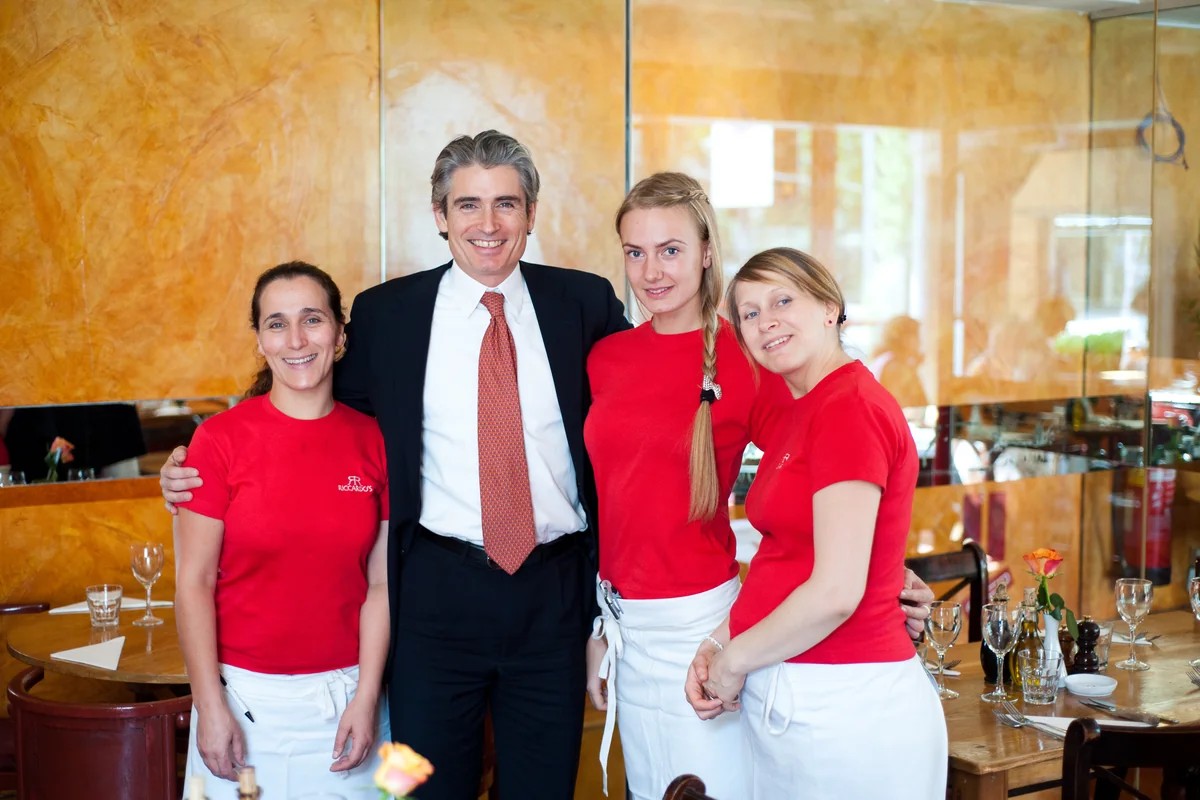
Sector HospitalityWhere Chelsea, LondonFrom 2017My role Owner and operator
Twenty-two years of running it the way restaurants have always been run
I opened Riccardo’s on the Fulham Road in Chelsea in 1995, a year after a trip to Florence where I ate in a small family restaurant with no menu. The owner told us we would love the food because his mother was cooking. That was the whole idea I brought home: simple Tuscan food, made properly, served without ceremony.
By 2017 we had been open for twenty-two years, and the restaurant ran the way restaurants have always run. Long hours. People leaving and being replaced. Most of the decisions that actually mattered made on instinct, in the middle of service, by whoever happened to be standing closest to the problem.
None of that was unusual. That was the problem. [ Riccardo: the moment you decided to change it, in your own words. A season, a walkout, a number that stopped looking acceptable. One or two sentences. ]
A framework built for engineers, tried on a room full of people serving dinner
Scrum was created in the early 1990s by Dr. Jeff Sutherland and Ken Schwaber, for software teams that had to keep changing direction without falling apart. It is not a set of rules about software. It is a way of deciding what a team does next, out loud, in short cycles, with the people doing the work making the call.
[ Riccardo: how you and Jeff came to work together. One or two sentences. ]
The question neither of us could answer from a book was whether any of it survives contact with a service. A sprint runs two weeks. A dinner service runs four hours and nobody gets to replan it halfway through.
Three changes, and not one of them was software
A stand-up before every service. The whole team, standing, before the doors open. What is on tonight, what went wrong yesterday, and the one thing we are fixing today. Nine years later it still runs, twice a day, fifteen minutes, led by the team. When I am in London I stand with them. When I am not, I dial in and listen. It runs either way, which was the intention: the room should not need me in it.
A board the whole team can see. The week’s work written where people walk past it, instead of held in a manager’s head and handed out in pieces. There are several now: front of house, kitchen, maintenance, marketing and admin, and one for recruitment. Anything blocking us goes up as a red note so it cannot be walked past, and anything needing repair goes straight onto the maintenance board, where the maintenance team read it when they arrive. The recruitment board means the whole team can see where every conversation with a candidate has reached, so filling a role is the team’s job and not one person’s.
The team deciding how the room runs. This was the hard one, and it is the one that did the work. Deciding how a service is covered is a judgement the people covering it are better placed to make than I am, and until 2017 I was the one making it. [ Riccardo: one concrete example of a decision that moved to the team. ]
Not all of it held. [ Riccardo: what you tried that did not work and dropped. Other operators will trust the page more for this paragraph than for any of the ones above it. ]
[ The board as it actually looks before service. A photograph of the real thing, not a recreation. ]
Team member turnover down, morale up, profit up
That line is the one that gets quoted, and on its own it is not evidence. Here are the figures underneath it, as Riccardo gave them at Harvard in January 2020.
74% → 91%
Customer satisfaction
60% → 90%+
Team happiness
10%
Pay rise for the team
We wrote down what we did
Jeff and I presented the whole thing at the 2019 Agile Conference in Washington D.C., and then wrote it up properly as Making It Happen: Creating the World’s First Agile Restaurant. The book is the long version: what we changed, in what order, and what broke on the way.
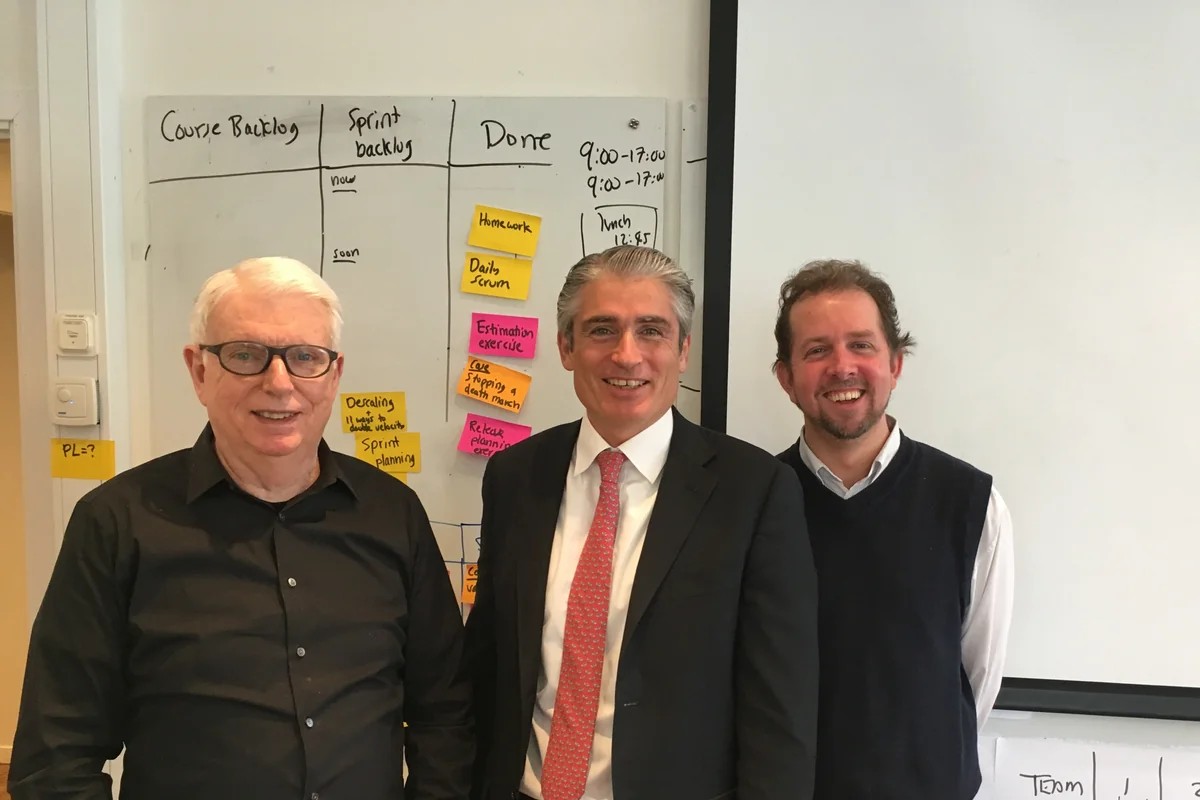
Riccardo with Dr. Jeff Sutherland and Henrik Kniberg.
A restaurant is a hard test, which is why it is a useful one
Nothing in a dining room is theoretical. If a change does not work you find out that evening, in front of paying customers, and you cannot ship a fix on Tuesday. Anything that survives a year of service is not a framework someone believes in. It is a way of working that pays for itself.
That is the work I do with other operators now: not Scrum handed down from software, but the parts of it that hold up when the business is a floor, a rota, and a set of numbers people actually look at.
Want the version of this that fits your business?
Client names, figures, and references available on request.